We are a school for children with special needs using a multi-disciplinary approach. Our aim is to provide a caring and sensitive environment to the students and nurture skills that will assist them in independent living.
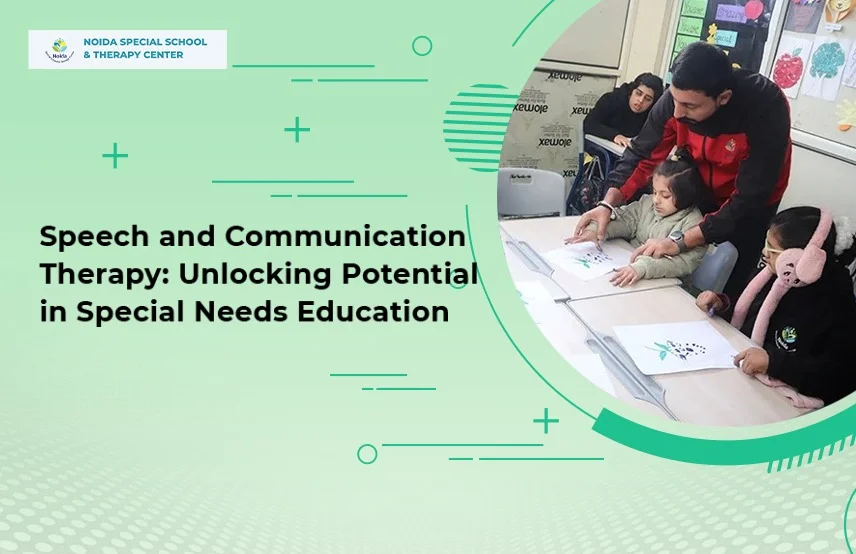
Communication is one of the most crucial skills that a child learns while growing up, as it is the only way by which they can express their thoughts, feelings, and emotions. However, not every child can develop this skill completely, which is why they require speech therapy.
If your child is also facing issues while pronouncing a word or creating sentences, don’t worry, as with right guidance and support, they can improve their communication skills and confidence.
Speech and communication therapy is a specialised support given to help children who face difficulty while speaking, understanding language, or communicating. This service is provided by professionals, who are known as speech-language therapists.
The main purpose of this therapy is to help children develop the ability to understand and communicate clearly and confidently. This can include improving pronunciation, expanding vocabulary, learning how to form sentences, understanding conversation, and more.
Speech therapy focuses on how words are spoken, as well as how children understand language, express their ideas, and interact with others. The therapy sessions are fun and interactive, which involves activities, games, pictures, and storytelling to encourage active learning.
Many children often face communication challenges as a part of their development, and these challenges can affect their learning, social interaction, and overall confidence in school.
Speech therapy is particularly helpful for children with specific conditions like autism spectrum disorder, Down syndrome, attention deficit hyperactivity disorder, and more. Children with these disabilities find it difficult to express their needs or interact with classmates.
Therapy helps overcome their fear by teaching them practical communication skills. As children begin to communicate better, they can participate more actively in classroom activities, build friendships, and feel more confident in their abilities.
Parents and teachers can look for certain signs that may indicate a child needs support with communication skills. Some common signs include:
If these signs appear consistently, it may be a sign to consult a speech therapist, especially for children with conditions such as Autism Spectrum Disorder or Attention Deficit Hyperactivity Disorder. Early support can greatly improve a child’s communication skills and overall confidence.
Strong communication skills play an important role in a child’s success at school. When children can express themselves clearly and understand instructions, it becomes easier for them to participate in classroom activities and engage with lessons.
Speech therapy also supports the development of reading and writing skills because language learning is closely connected to communication abilities.
Apart from academic benefits, therapy also helps children improve their social skills. When children learn how to start conversations, share ideas, and understand others, they find it easier to make friends and build relationships.
Conclusion
Speech and communication therapy can truly change the lives of children with special needs. By helping them develop the ability to express their thoughts, understand others, and interact confidently, therapy opens many doors for learning and personal growth.
With early support, patience, and the right guidance, every child can improve their communication skills and reach their full potential. When children learn to communicate effectively, they gain not only a voice but also the confidence to connect with the world around them.
April 09, 2026
March 30, 2026

March 26, 2026
March 13, 2026
February 28, 2026
February 24, 2026
Speech and communication therapy helps children to improve their speaking, language understanding, and social communication skills with the help of activities and professional support.
Children who face speech delays, pronunciation difficulties or conditions like autism, Down syndrome, etc. can benefit from speech and communication therapy.
Speech therapy can improve a child’s ability to express their ideas, understanding of lessons, and participation in class and help to build a better relationship with teachers and classmates.
A child should start speech and communication therapy when they turn 2-3 years old, only if they show signs of speech delay or have difficulty while communicating. Early intervention helps with faster language development.