We are a school for children with special needs using a multi-disciplinary approach. Our aim is to provide a caring and sensitive environment to the students and nurture skills that will assist them in independent living.
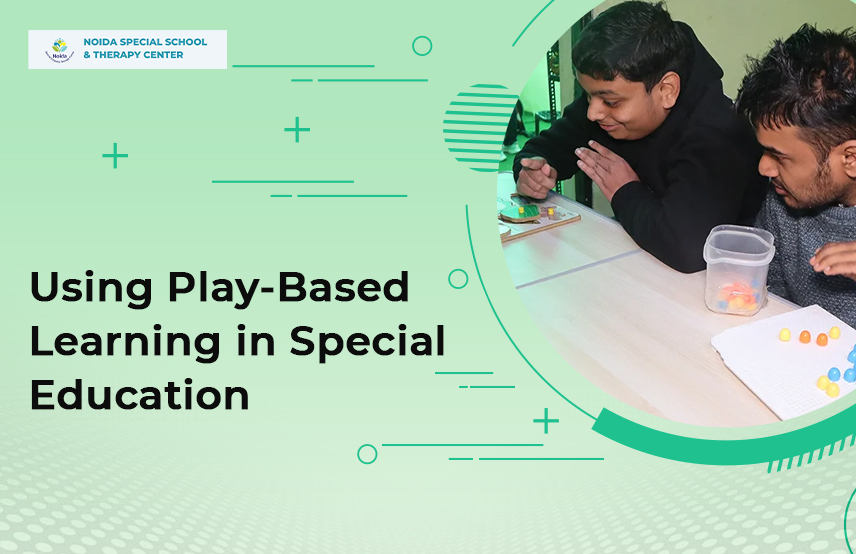
Play-based learning in special education involves child-focused and carefully planned activities to develop mental, emotional, social, and motor skills in a supportive and genuine environment to make the learning more engaging.
If you want to learn about the use of play-based learning in special education, then read the blog till the end, as you’ll learn about:
Here are some key benefits of play-based learning for children with special needs:
The following are some proven strategies used in special education classrooms:
The following are types of play in special education:
The play-based learning in special education is a type of teaching approach where the children learn through games, activities, role-play activities, and more. This learning method helps children to develop social, emotional, and learning skills in an interesting and natural way.
At Noida Special School, we enable children to think curiously via sensory activities, interactive tools and role-playing games to reduce frustration and improve communication by providing a safe environment.
March 30, 2026
March 26, 2026
March 13, 2026
March 06, 2026
February 28, 2026
February 24, 2026
The play-based learning in special education is a type of teaching approach where the children learn through games, activities, and play together. This learning approach helps children to create social, emotional, and learning skills in a more natural and enjoyable way.
Play-based learning is effective for children with special needs because it helps to reduce the stress and make children feel comfortable and improve communications, motor skills, social skills, confidence, and more while allowing children to learn at their own pace.
Parents can support play-based learning at home because it encourages simple activities, such as following the child’s interests and using games to practise communication, sharing thoughts and feelings, and more.